Langston Hughes, the first African American writer to achieve an international literary reputation, spent the 1920s leading the Harlem Renaissance. His work and life became greatly influential during this time, as he portrayed the lives of ordinary, working blacks in America. "Bop," an essay written by Hughes in 1949, confronts social conditions of the time and stresses a racial consciousness. He begins by setting the scene outside of his character's, Simple, house. The first person point of view engages readers into the narration, as Simple asks Hughes to listen to the music playing upstairs with him. The narrator finds the music to "sound like pure nonsense syllables" (Hughes 191), reminding him of the old scat days. Simple proves this music is quite different as "Re-bop was an imitation like most of the white boys play. Be-bop is the real thing like the colored boys play" (Hughes 190). After reiterating that it stills sounds like nonsense, Simple disputes Hughes' opinion by asking him about be-bop's origins. The purpose in writing this essay becomes evident as Simple explains the origins of be-bop music. He tells of the police beatings that make the riffs of be-bop music, to inform the unaware readers of the influence of black discrimination and society on culture. The contrasting views of be-bop music are comparable to the contrasting views of how race effects culture. Like the narrator sees the music as nonsense, he finds Simple bringing race into everything as nonsense. Hughes is alluding to the inadvertent effect society has on a culture, including music. Simple repetitively says, "Bop! Bop! Be-Bop! Mop! Bop!" (Hughes 191) to emphasize the origins of the music. He wants to highlight the harsh punishments faced by the black community, during the time which the essay was written. The colloquial diction tied with the point of view, allows the reader to follow the conversation easily and get directly to the point. Hughes effectively articulates the struggles of racial discrimination and societal effects on culture. The essay confronts the reader to be racial conscious, despite personal skin color.
 |
Bop! Bop! Be-Bop! Mop! Bop!
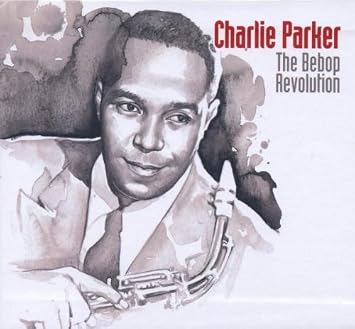
"But there are some few white boys that latched onto it right well. And no wonder, because they sat and listened to Dizzy, Thelonius, Tad Dameron, Charlie Parker, also Mary Lou, all night long every time they got a chance."
Source: Amazon
|

No comments:
Post a Comment