In "The Man Who Loved Books Too Much," Allison Hoover Barlett writes about book thief John Gilkey. Ken Sanders, a Salt Lake City rare book dealer, has been chasing down the thief for years, and finally catches a break by learning his name and receiving a mug shot several days before an antique book fair in New York City. Her perspective as an outsider, a journalist interested in the case, makes readers trust her words. Barlett had initially written an article for her San Francisco magazine to cover this topic, but eventually it gathered large enough interest to create a book. She begins by illustrating her experience at the fair, and how she stalked out Sanders, and quotes him throughout her narrative of their conversation. She also met with Gilkey as he was in prison for bad checks, helping her appeal to ethos as she shows both sides of the story. She shows Gilkey's literary obsession, and his questionable mental state, without painting him as the villain and Sanders as the hero. She shows the views of those Gilkey affected and those who were after him, as well as Gilkey himself. She is constantly in the middle herself, and she shows that by describing the struggle she has between the moral responsibility she feels to tell the authorities of his crimes, and the lack of technical legal responsibility she has to do so. This appeals pathos in a way as it evokes feelings of pity and understanding from readers. Halfway through the book, I have yet to discover a concrete purpose from Barlett. But I find possible hints to it, as she finds it important to show both sides of the story and the fact that everyone has a reason behind what they do, even herself.
Sunday, December 20, 2015

Sunday, December 6, 2015
TOW #11 - "Knoxville: Summer of 1915"
In "Knoxville: Summer of 1915", James Agee
describes the time in his life when he was a “new plate,” before he became
damaged. His credibility comes from the fact that he is depicting his own life,
and allowing himself to bring intense emotion into the piece. Before the reader
can begin to understand Agee's purpose, one must recognize that this piece was
not meant to stand alone; but it is an introduction for "A Death in the
Family", an anecdote about the death of his father. Now it becomes quite
clear, the story of his childhood is meant for anyone that will listen to his
story. A story about a simpler and more innocent time in his childhood, before
it all became rotten. Agee depicts an extremely average summer night in
Knoxville, where nothing exciting happened, yet everything was peaceful and he
was content with the world and his family. To achieve his purpose, Agee uses
specific diction. It illustrates how a little boy would think and act, which
allows the reader to connect emotionally with a young Agee and really step into
the time period of his life that he is describing. This helps the reader
understand the purity of youth by reading about it firsthand. Symbolism also
plays a huge part in helping Agee achieve his purpose to depict the innocence
of his childhood. He writes, "those who receive me, who quietly treat me,
as one familiar and well-beloved in that home: but will not, oh, will not, not
now, not ever, but will not ever tell me who I am" (Agee 175). Knowing
oneself and being comfortable in one's skin is sign of maturity, whereas on the
other hand having to be told who you are is a sign of naivety and youth. This
really solidifies his purpose of showing innocence and purity in the context of
the daily life of a young James Agee. Agee expertly aides his audience in
understanding the innocence of his youth before corruption in "Knoxville:
Summer of 1915".
Sunday, November 22, 2015
TOW #10 - "Novak Djokovic Ascends Ever Higher, With No Clear Landing in Sight"
As the 20,000 present at the 02 watched Roger Federer double-fault for the second time in the match, Novak Djokovic claimed victory at the Barclay's ATP World Finals. With almost 7,000 points separating Djokovic from no. 2 Andy Murray, it is clear he sits a whole class apart from the rest of the field. In the eleven month season, the 28 year old no. 1 was able to end the year with three grand slam titles, a defeat in the French Open final, six Masters titles, the Finals title and an 82-6 win-loss record. New York Times writer Christopher Clarey utilizes statistics and complimentary diction to tell of "Novak Djokovic's finest season." Clarey shares stats of Djokovic's game throughout to put into perspective one man's dominance over an entire field. "Djokovic [has] more top-10 victories in a season than any other men’s player in the Open era. Over his career, Djokovic’s winning percentage against the top 10 is 66.1 percent (65.5 percent for Nadal, 65.4 percent for Federer)." The author makes obvious appeals to logos, as readers are able to understand how outstanding his game must be, especially with the comparison to his fellow 'Big Four' members. Through his successful use of statistics, readers are able to grasp how this must truly be Nole's finest season. In a span of eleven months, only four (with a combined six wins between them) were able to stop "the Joker." Clarey makes it a point to spread the light of Nole's greatest with his complimentary tone. Clarey writes about how "Yet to appear is a younger rival who looks ready to take on Djokovic." But with Djokovic "in his prime at 28 with room to improve. [...] The only real question is how many records he can pick off before he loses his edge." As the world watched Nole clinch his fifth title at the World Finals, Clarey and the rest of us can only wait excitedly for what's to come in Melbourne as the Australian Open kicks off the 2016 season in January.
Sunday, November 15, 2015
TOW #9 - "Paris Pleure Ses Morts" Visual

The attacks on Paris came as a shock to the world. As news of the terrorist attacks spread from country to country, #PrayforParis began to trend all over social media and the world community came together to not only mourn the victims, but also humanity. Carlos Latuff utilizes symbolism and juxtaposition in his political cartoon to represent the Paris attacks. Latuff's use of the infamous French flag becomes a very somber symbol, as he represents the events that took place on November 13, 2015 in Paris in his political cartoon. The infamous symbol of "Liberté, égalité, fraternité" takes on a dark tone, as the smeared red conveys the bloodshed of the 129 victims. The blood of the French flows down the cartoon with solemn and serious imagery. Although the flag is torn and tattered the cartoon fails to represent the unity and strength of the French people. The position of the blue band adjacent to the white "tarp," traditionally used to cover dead bodies, adds to the somber feeling. Underneath the white band, lies four bodies bringing an impressionable effect on the viewer. The juxtaposition of the two bands next to each other forms a slick representation of the Paris attacks. The vibrant tricolour of the French flag carry a more sour note in this cartoon as it carries much emotion and highlights the tragedy of the situation. After viewing this, one cannot help but feel solidarity with not only the people of France, but all of humanity. A very horrific moment in human history, the attacks on Paris will have an everlasting effect on those around the world. As Latuff's cartoon brings to light the values of democracy that we must protect and embody to preserve the rights of all people.
Paris, Nous sommes avec vous.
Wednesday, November 11, 2015
IRB Intro #2
The Man Who Loved Books Too Much by Allison Bartlett came to me at the recommendation of Grace. I share a love of mystery novels and apparently this is the closest one can come to it in the form of a non-fiction book. The hooking quote, "What would you do for the love of a good book? For John Charles Gilkey, the answer is: go to prison." only makes me want to read on. The reviews on the back, also praise Bartlett's writing and makes me excited to read on this mixture of crime and a strange obsession.
Sunday, November 1, 2015
TOW #8 - IRB "Seeing Voices"
Three sections in and Sacks' argument, the concept of language should not be limited to oral or spoken, is quite clear. So deep into the world of the deaf, one should have a new appreciation for language, as Dr. Sacks intended. He argues language is a system of generative grammar and syntax, capable of an infinitely variable range of expression. The Gallaudet student revolt marked a victory for deaf people everywhere. From this to the 1988 student strike at Gallaudet University, in which deaf undergrads demanded and got a deaf president, is a logical move. His final section makes his point with a thump. He saw it all, even a young woman signing to her dog right there on the campus that invented the football huddle. You have to know that, at Gallaudet, ''only a minority of the faculty ... is deaf" (90) and "ASL, for the most part, is either not known to, or not used by, hearing teachers.'' (93). As Sacks writes of the thousand Gallaudet students signing freely in the great plaza in front of the Capitol, one appreciates the beauty of another language and how discomforting not being able to use it to deal with hearing people. But after a week of turmoil, the deaf students had won a great symbolic victory, as King Jordan who had been deaf since the age of 21 was elected president, in their fight for respect and recognition of the integrity of deaf culture. Stuck between the debate of whether it is better for deaf children to learn only sign or just speech and lip reading, or eliminate the enormous burden imposed on those children and teach everyone ASL at an early age. Dr. Sacks, whose heart is in the right place, wants the deaf to have all they need, but most of all, their own natural and private language. He brings to our attention a problem that is never easily going to be solved.
Sunday, October 25, 2015
TOW #7 - Trump Political Cartoon

Sunday, October 18, 2015
TOW #6 - "The Crack Up"
F. Scott Fitzgerald, the infamous American novelist whose works are the paradigmatic writings of the Jazz era, writes in his essay The Crack Up about a much less magnificent topic, midlife crisis. In the essay, Fitzgerald chronicles his personal "crack up," a loss of self-identity leading into a spiral of declining self worth. The reader is led through Fitzgerald’s psychological journey: feigned direction in life; the sudden realization that all stability in his life is a façade; the black depression that follows as he realizes he has lost trajectory in life; and finally, tentative acceptance of an existence that is far from ideal. Throughout this journey, the reader is uncertain as to what the author’s purpose is. Fitzgerald’s account is highly personal, and seems to lack any objective in its narrative. However, if the reader persists on through Fitzgerald’s melancholy trek, they are rewarded with a bitter-sweet resolution and purpose. Fitzgerald resolves that, in order to bring himself from the grip of depression, he must accept that he is not as relevant as he once thought he was; and that he must reserve himself to the role of jaded miser in order to salvage his ability to function in society. Thus, through informing the reader on the topic of gradual depression, or “crack up," Fitzgerald is able to prove his point that life manages to creak on, even when all seems lost. In order to make this point, Fitzgerald employs various types of rhetoric, but most prevalently an extended metaphor involving a cracked plate. He compares a person’s depressive breakdown to the cracking of a plate. Like the cracking of a plate, depression can happen slowly over time until it consumes a person. But also like a cracked plate, a person can be repurposed, though not to their former glory, thus connecting to the author’s argument that a “crack up” isn’t the end.
Sunday, October 11, 2015
TOW #5 - "The Families Funding the 2016 Presidential Election"
The 2016 Presidential campaign is underway as the election is only a little over 390 days away, a mere second in the grand scheme of things. Nicholas Confessore, a New York-based political reporter, Sarah Cohen and Karen Yourish write about the "overwhelmingly white and rich" families funding the 2016 president election in order to emphasize their measures to protect their own wealth through use of imagery and statistics appealing to ethos and logos. The New York Times article states that out of the roughly 120 million U.S. households, just 158 families provided nearly half of the money for campaigns to capture the white house. Imagery is evoked as they depict the top 1% of American households that have donated millions to the political arena as "white, rich, older, and male" billionaires that have made most of their fortunes in just finance and energy. The writers also highlight their residings "in an archipelago of wealth and exclusive neighborhoods dotting a handful of cities and towns." The imagery serves to provide background for the readers to portray the behind the scenes of the 2016 campaign. As well as confirm the stereotypes of the top 1%, and highlight their overwhelmingly majority preference to "lean right." The families who have invested the most have been contributing millions to Republican candidates. The classification of "minted billionaire" donors that have deployed their vast wealth are reflecting the shifting composition of the country's economic elite and the measures to protect their own wealth. The article also makes multiple appeals to ethos and logos through various statistics and quotes from investors, political, and demographic experts. Revealed through interviews and hundreds of public documents, lies a class distant from much of America. One of the many statistics reported states, "The 158 families each contributed $250,000 or more in the campaign through June 30, according to the most recent available Federal Election Commission filings and other data." The information from the FEC filings highlights the contributions of over half the money in the president election, the vast majority of it supporting Republicans. And most Americans who have been following the presidential campaign are well aware of the Republican candidates pledges to pare regulations; cut taxes on income, capital gains, and inheritances; and shrink entitlement programs. The big investments in the elephant party are driving the widening inequality as the share of national wealth and income going to the middle class has shrunk. Appealing to ethos and logos, the writers are quick to make a point about why most of the funds are headed to the elephant party. Confessore, Cohen, and Yourish successfully showcase the reasoning of huge funding to Republican candidates to make aware to the American public how the right are trying to stay rich. The authors make their stance on the top 1% from the very beginning to the end of the "entrepreneurs who have opinions of everything."
Sunday, October 4, 2015
TOW #4 - IRB "Seeing Voices"
Written from the hearing perspective of Oliver Sacks, a neurologist and author who felt the brain was the "most incredible thing in the universe", Seeing Voices is a book about deaf issues, mainly pertaining to language learning. Despite in the opening admitting that he doesn't know any sign language nor has he ever participated in Deaf Culture, Sacks writes an interesting book about his discoveries about learning language and his stories of historical figures. As a self-proclaimed impartial observer, Sacks writes to inform the public about deafness, as it was published in 1989 when the idea of the deaf was not completely understood by the public. He clearly wants people to be less ignorant about the importance of the deaf and how learning about the deaf can change one's perspective. He went to multiple researchers, books, and schools to understand the topic and accurately present the facts. Despite the "cold-hard facts", Sacks frequently presents he also uses anecdotes to appeal to pathos. He tells the tale of David Wright, an Englishman who thought he knew what language sounded like until he was seven. Sacks wrote about how Wright's, who had lost his hearing gradually in early childhood and became stone deaf at the age of seven, vocabulary had been affected. Readers easily are able to connect that hearing and learning go hand-in-hand because the words we constantly hear we tend to incorporate into our own vocabulary. As communication and language is so essential for humans, learning about deaf culture truly changes one's perspective. "We see through our eyes and feel through our fingers because we have been conditioned to do so." Sacks' observations about language are quite profound and important, as he bolsters the argument for sign language being taught to the deaf. He makes very valid and interesting points not in particular to deaf people or culture, but about language learning, and I cannot wait to continue reading.
Friday, September 25, 2015
TOW #3 - "Pope Francis Meets America"
Nancy Gibbs, the
managing editor of TIME and best-selling
co-author, teams up with Elizabeth Dias to write a magazine article about the
pontiff's first visit in the States. As
a major event in Catholic history, as well as American, the two write to not
only the over 65 Roman Catholics residing in the States but also to those
looking to read about the momentous visit of the pontiff. In their article, "Pope Francis Meets America" Gibbs and Dias utilize metaphors, imagery, and juxtaposition to encapsulate the historic visit of the Pope in order to explain his role as a strategic player on the global stage. To begin the
article, America is described as the love child of faith and power, a metaphor
for the separation of church and state, due to its welcoming people of all
faiths after it grew rich and mighty. Their metaphor for the US sets the tone
as they discusses this particular genealogy in the next paragraph. The metaphor
not only effectively provides background, but also establishes the authors'
viewpoint on the US as a superpower of hubris and materialism. Imagery is plenty
throughout the article, from the description of the Pope's facial features that
"dissolved into a look of distant contemplation" to the line "he
came as a shepherd and was everywhere tending his flock." The authors' use
of imagery creates a vision of Francis as a sturdy 78 who is intensely focused
and a shrewd operator, who has come to the American shores at just the right
time and it works through its conflicts of faith and politics. It seems as if
the authors' description of Francis as a shepherd is not far off, as he is
driven to stand alongside the leaders of the world for his agenda about the
poor and climate change. He demonstrates the strengths and limits of moral
leadership, that the authors hint the US lacks in the modern age. The juxtaposition of
Paul VI and John Paul II's visits to the US back before Francis' visits in the
age of social media, serves to create the very different extenuating
circumstances of papal visits over the past 50 years. Quite a lot has happened
over the past 50 years, as the authors are sure to point out the effect of
social media in Francis' papacy, allowing the Pope's message to be more
intimate and give way to the age of persuasion. The pairing very effectively
cause the readers to understand the very different situations of popes over the
years, and how the modern age of Instagram gives Francis the ability to be more
personal. Pope Francis, famous for his humble ways and going off script, is defined as a strategic player in this TIME article as Gibbs and Dias successfully utilize rhetorics to encapsulate the historic visit of Pope Francis.
Sunday, September 20, 2015
TOW #2 - Salvation Army/CareHaven "The Dress" PSA

Tuesday, September 15, 2015
TOW #1 - "Don't Trust Putin on Syria"
Andrew
Foxall, the director of the Russia Studies Center at the Henry Jackson Society,
shares his view on Western policies for the Middle East and Russia's
"diplomatic" approach on Syria in his article titled, "Don't
Trust Putin on Syria." Foxall writes to Western political leaders, as
result of the destruction occurring in Syria, urging them to not be "stepped"
on again by the Russians. As a director of Russian studies, he brings his
experiences and knowledge to the table to make his stance clear-cut. His
attitude toward the Syrian situation is quite clear, as he begins by starting
his article stating, "Syria is being destroyed." He continues to
describe the situation in Syria and the policies Western governments have
created to combat the jihadists. When describing Russia's role in the Syrian
struggle, Foxall makes sure to emphasis President Putin's close relations to
Islamist terrorism. He then writes about the Islamist terrorists from the
southern Russian republic of Chechnya which lead to recently appointed prime
minister to be swept into presidency. Foxall's logic makes perfect sense as he
cites evidence of how Putin had convinced the West that the threat it was
facing in Afghanistan was the same as Russia faced in Chechnya; allowing him to
tamp down Western criticism of Russian brutality in Chechnya. Foxall's writing
continues to make an impact on readers as he dismisses Putin's call to action
for an international effort against terrorism, as it is only a ruse to
rehabilitate himself just as he did after 9/11. Throughout the article, he
switches between a second and third person narration to emphasis certain
paragraphs, like when he begins his first piece of evidence against Putin's
attempts of international coalitions writing, "We've been here
before." Foxall's colloquial manner makes his points come across very
distinctly and strengthen his argument. As he relies heavily on logos,
presenting evidence that makes his article more valid, it encourages his
thought that the Kremlin's "enthusiasm" for cooperation could
undermine current US-Russian relations and cause many to redefine their relationships
with Washington as well. In Foxall's final paragraph, he writes, "We
must not let Mr. Putin dictate the terms of cooperation. To do so risks
repeating past mistakes." His purpose is clearly stated as he alludes to
the issues in Georgia and Ukraine caused by the West's failure to block
Russia's diplomacy. He sensibly pushes his call to action to the forefront as
he warns the West of what will happen if it repeats its past mistakes.
As a high school student who does not typically follow
politics and world news, unless discussed in school, Foxall manages to clearly
present his opinion and back it up with evidence in such a manner that the
reader is compelled to join his side.
Wednesday, September 9, 2015
IRB Intro #1
Seeing Voices, a book by Oliver Sacks, caught my attention as the inside coverlet praises Sacks and his journey into the world of the deaf. One of the five senses that writers typically appeal to heads the forefront of this work. The book is beautifully described as I was appealed to the deaf culture, a world which is quite foreign to myself. I find human conditions fascinating and look forward to reading about Sacks' take on the four sense world.
Tuesday, August 25, 2015
"The Figure a Poem Makes" by Robert Frost
Robert Frost, a Pulitzer Prize winning author known for his imagery, found more popularity than any other serious American poet has ever experienced. In his essay, "The Figure a Poem Makes," he discusses his opinion how a poem should be and what it should communicate to readers. Speaking to his audience of fellow artists, he begins by writing that "the object in writing poetry is to make all poems sound as different as possible from each other" (Frost 176). He discusses how syntax, words, and sentences are not enough to create distinction, but poets need the help of context to create the greatest variety. Frost compares the figure of a poem to the figure of love, as "no one can really hold that the ecstasy should be static and stand still in one place" (Frost 177). He uses this metaphor to compare the beginning of delight and the ending in clarification that both love and a well written poem should share. He suggests a link between the poet and reader when he writes, "no tears in the writer, no tears in the reader" (Frost 177). Through his use of imagery, Frost identifies that this link between the poet's feelings and reader's emotions is a great achievement for a poet, when one is able to convey their feelings through writing. He then notes that an artist's logic is backward after writing and relates back to the link by stating, the writing must be a revelation for both the poet and reader. While discussing the logic of an artist, Frost notes the contrast between a scholar an artist, despite both working from knowledge. He observes that scholars acquire knowledge from the lines of logic, while knowledge for artists “happens in and out of books” (Frost 178). He is suggesting that poetry cannot be measured by the same logic or means of scholars, but is best evaluated through emotion. Frost’s strong opinions on poetry are well-supported and invokes the reader to consider his points when writing. Through his infamous imagery, Robert Frost manages to ingrain the delight to wisdom structure in the reader’s brain.
 |
| The Figure of a Poem "It begins in delight and ends in wisdom." Source: Huffington Post |
Monday, August 24, 2015
"Bop" by Langston Hughes
Langston Hughes, the first African American writer to achieve an international literary reputation, spent the 1920s leading the Harlem Renaissance. His work and life became greatly influential during this time, as he portrayed the lives of ordinary, working blacks in America. "Bop," an essay written by Hughes in 1949, confronts social conditions of the time and stresses a racial consciousness. He begins by setting the scene outside of his character's, Simple, house. The first person point of view engages readers into the narration, as Simple asks Hughes to listen to the music playing upstairs with him. The narrator finds the music to "sound like pure nonsense syllables" (Hughes 191), reminding him of the old scat days. Simple proves this music is quite different as "Re-bop was an imitation like most of the white boys play. Be-bop is the real thing like the colored boys play" (Hughes 190). After reiterating that it stills sounds like nonsense, Simple disputes Hughes' opinion by asking him about be-bop's origins. The purpose in writing this essay becomes evident as Simple explains the origins of be-bop music. He tells of the police beatings that make the riffs of be-bop music, to inform the unaware readers of the influence of black discrimination and society on culture. The contrasting views of be-bop music are comparable to the contrasting views of how race effects culture. Like the narrator sees the music as nonsense, he finds Simple bringing race into everything as nonsense. Hughes is alluding to the inadvertent effect society has on a culture, including music. Simple repetitively says, "Bop! Bop! Be-Bop! Mop! Bop!" (Hughes 191) to emphasize the origins of the music. He wants to highlight the harsh punishments faced by the black community, during the time which the essay was written. The colloquial diction tied with the point of view, allows the reader to follow the conversation easily and get directly to the point. Hughes effectively articulates the struggles of racial discrimination and societal effects on culture. The essay confronts the reader to be racial conscious, despite personal skin color.
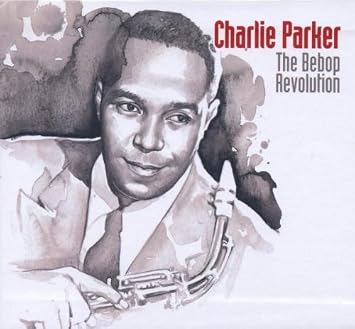 |
Bop! Bop! Be-Bop! Mop! Bop!
"But there are some few white boys that latched onto it right well. And no wonder, because they sat and listened to Dizzy, Thelonius, Tad Dameron, Charlie Parker, also Mary Lou, all night long every time they got a chance."
Source: Amazon
|
Friday, August 21, 2015
"Women and Honor: Some Notes on Lying" by Adrienne Rich
In the midst of the 1960s, Adrienne Rich, a Radcliffe graduate and later Robert Frost Silver Medal recipient, reinvented herself as a political radical and feminist. Her essay, Women and Honor: Some Notes on Lying, began as notes concerned with relationships between and among women. She first shared these notes at a women writers' workshop in Oneonta, New York in 1975. In this speech-turned-essay, she discusses the complexities of lying, and invokes the questioning of honor and truth between and among women. Rich begins the essay by discussing the old, male idea of honor, relating to his integrity. As well as discussing the male idea of women's honor, which is focused around her husband and duties as a wife. She writes, "honesty in women is not considered important" (Rich 412). Rich acknowledges how women lie to keep control of a male-dominated situation and as a barrier from discomfort; but argues that lying not only causes alienation from others, it also cuts us off from ourselves. As she analyzes the complexities of lying, she invokes the question of honesty and truth. She uses many examples and metaphors throughout to support her opinion. For example, Rich writes, "when we look closely, or when we become weavers, we learn of the tiny multiple threads unseen in the overall pattern" (Rich 414). She uses this metaphor to compare the concept of truth to a carpet and its multiple unseen threads. Rich identifies lying as a false source of power, which a woman clings to because "she is afraid that her own truths are not good enough" (Rich 417). To reiterate and enhance her point that women have been driven mad for centuries, due to experience and instincts in a culture that only validates the male experience, she inserts rhetorical questions throughout about the need to lie. Rich's argumentative essay continues full circle, as she successfully accomplishes her purpose, by provoking women readers to be honest with themselves and fend against the male influenced environment. Adrienne Rich makes an impressionable mark and calls for honesty in all relationships.
 |
| Lying: A False Source of Power Women must become courageous enough to be honest with everyone, including themselves. Source: Shutterstock |
Subscribe to:
Posts (Atom)